
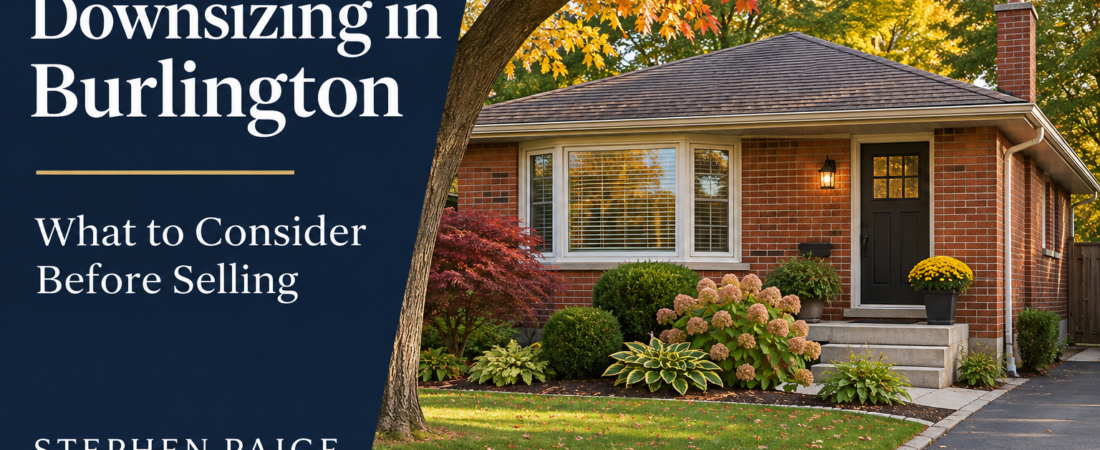
You may have rooms you rarely use, a yard that takes more effort than you want, or stairs you would rather avoid. Downsizing starts to sound appealing.
But a smaller home isn’t automatically a better fit—or a less expensive way to live.
Before selling your Burlington home, work out what you want the move to accomplish. That gives you a clearer basis for choosing your next property and deciding whether the move makes sense.
Decide what you want to improve
“Less house” is a starting point, but it helps to be specific.
Are you looking for less maintenance? Main-floor living? A location closer to family? More flexibility to travel?
Those priorities can lead to different choices. A smaller detached home may still require lawn care, snow removal and exterior maintenance. A condo may reduce some responsibilities while introducing monthly fees, shared spaces and rules to consider.
Write down what you want to stop doing—and what you still want to enjoy.
Look at replacement homes before committing to a sale
Before assuming what your next home will cost, look at properties you would actually consider buying.
A smaller home in your preferred Burlington location may cost more than you expect. A less expensive property may need updates or involve compromises in parking, storage or accessibility.
We can compare realistic options alongside the likely selling range of your current home. That helps replace a vague idea with a workable plan.
Compare the complete cost of moving
The difference between your sale price and purchase price doesn’t tell the whole story.
Your comparison should account for selling commission and applicable HST, legal expenses, purchase closing costs, moving expenses and any work the next property needs. Ask your lender about any mortgage-related costs that apply to your situation.
Then compare ongoing expenses, including property taxes, utilities, insurance, maintenance and condo fees where applicable.
The aim is to understand what the move could change financially before making commitments.
Check how the next home will function
A home can be smaller without being easier to live in.
Look at the entrance steps, laundry location, bathroom access and everyday storage. If you want to avoid stairs, check whether the rooms you need are genuinely on one level.
Measure the furniture you intend to keep. Consider where visitors would sleep, where seasonal belongings would go and whether parking works for your vehicles.
These details are easier to assess before you buy than after you move.
Make a plan for your belongings and timing
Sorting through a long-time home can take longer than expected. Start with items you no longer use, then work toward decisions about furniture and sentimental belongings.
The sale and purchase also need a coordinated plan. Whether you sell or buy first depends on your circumstances, available options and comfort with the risks. We should discuss that before either transaction begins.
Start with a conversation
Downsizing should support the life you want next. The right move may mean less space, fewer responsibilities or a different location—but it needs to work on your terms.
I’m Stephen Paige, Broker of Record, helping buyers and sellers since 2007. If you’re considering downsizing in Burlington or surrounding areas, I can help you compare your options, review your selling costs and plan the next steps.
Learn about my full-service selling approach and commission structure.